
Skip to content

Hazard Studies and Classification Files for Classified Establishments in Tunisia

Overview

Classified establishments, hazard studies and safety in Tunisia

A hazard study in Tunisia is part of the file for an établissement classé (classified establishment) with fire, explosion or accidental pollution risks (decree no. 2006-2687 of 9 October 2006). AHEC supports you along the whole path: classification file, EDD (hazard study), POI (internal emergency plan), fire safety study and evacuation plans, then follow-up and occupational health and safety.

7Capability areas
27+Specialised services
500+Group projects
Industrial Risk & OHS
In Tunisia: classified establishments and decree no. 2006-2687Tunisia

In Tunisia: classified establishments and decree no. 2006-2687

Dangerous, unhealthy or nuisance-causing establishments are governed by decree no. 2006-2687 of 9 October 2006 and the nomenclature of 15 November 2005, which places each activity in the 1st, 2nd or 3rd category. The category sets the procedure and the documents to provide; fire safety falls under law no. 2009-11 of 2 March 2009.

Legal basis
Decree no. 2006-2687 of 9 October 2006; nomenclature of 15 November 2005; law no. 2009-11 of 2 March 2009
Categories
Classified establishments, 1st, 2nd and 3rd category
Authorities
Civil Protection (fire safety)
Office
Tunis, Les Berges du Lac 2

The path of a classified establishment

  1. Activity category
  2. Classification file
  3. Hazard study
  4. Internal emergency plan
  5. Fire safety and evacuation
  6. Follow-up and drills
Saudi Arabia

Group experience: more than 500 projects delivered by AHEC in Saudi Arabia, where the group holds NCEC Class A classification.

See this service in Saudi Arabia

Our services in Tunisia

Classified establishments and classification file

Classified establishments and classification file

Step one: confirm your activity’s category and prepare the application.

  • Category of the establishment (1st, 2nd or 3rd) under the nomenclature of 15 November 2005
  • Classified establishment file and application for an operating authorisation
  • 1:200 site plan and supporting documents
Request a quote
Hazard study (EDD)

Hazard study (EDD)

Identify possible accidents, measure their effects and control them.

  • Hazard identification and ranking
  • Accident scenarios: fire, explosion, toxic release
  • Consequence modelling (DNV Phast, ALOHA) and effect-zone maps
  • Risk control measures
Request a quote
Internal emergency plan (POI / PII)

Internal emergency plan (POI / PII)

How your site responds to an accident, based on the hazard study scenarios.

  • POI (internal emergency plan), also called PII, written from the hazard study
  • Alert organisation and available resources
  • Action cards for each scenario
  • Preparation and evaluation of POI drills
  • Oil and chemical spill response plans
Request a quote
Fire safety study and evacuation plans

Fire safety study and evacuation plans

The file submitted to the Civil Protection for its opinion.

  • Fire safety file under law no. 2009-11 of 2 March 2009, for the Civil Protection opinion
  • Firefighting equipment, detection and smoke extraction
  • 2D / 3D evacuation plans, emergency exits and assembly point
  • Safety register and evacuation drills
Request a quote
Industrial risk analysis

Industrial risk analysis

Recognised methods for the most sensitive installations.

  • HAZOP and HAZID workshops
  • ATEX study (hazardous area zoning)
  • Bow-tie analysis (BowTieXP)
  • Quantitative risk assessment (QRA) and chemical risk
Request a quote
Occupational health and safety (OHS)

Occupational health and safety (OHS)

Protecting your teams every day.

  • Workplace risk assessment and risk register (document unique)
  • Workplace noise and air exposure measurements
  • Safety audits and site inspections
  • Safety training and ISO 45001 support
Request a quote
Contaminated sites and soils

Contaminated sites and soils

Assessing and treating soil and groundwater contamination.

  • Environmental site assessment (phase I and II)
  • Soil and groundwater contamination characterisation
  • Remediation feasibility studies and works supervision
Request a quote

Our method

  1. Site visit and process review
  2. Hazard identification and scenario selection
  3. Consequence modelling (fire, explosion, toxic)
  4. Risk control measures, POI and plans

What you receive

  • Complete classification file
  • Hazard study report with effect-zone maps
  • POI (internal emergency plan) and action cards
  • Fire safety file
  • 2D / 3D evacuation plans

Team and equipment

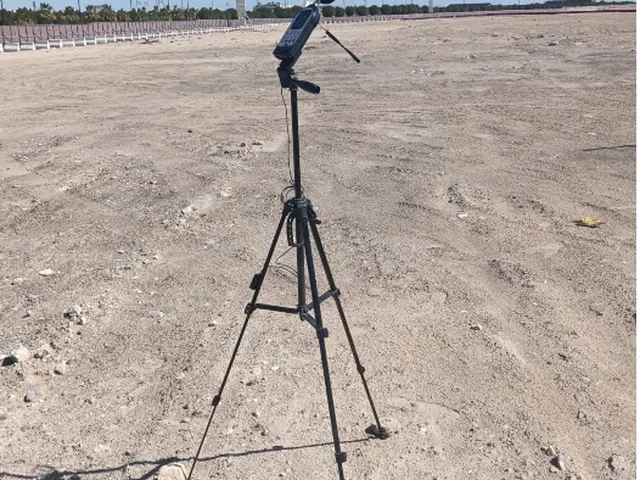
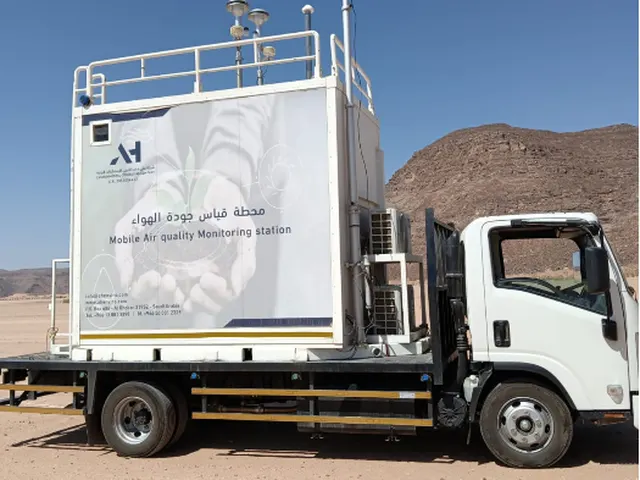
Our studies are carried out by a multidisciplinary team of environmental engineers based in Tunis (Les Berges du Lac 2), backed by the group’s specialists in Saudi Arabia. We use our own measuring equipment (air quality, class 1 sound level meters, soil and water sampling) and recognised modelling software.

Projects

References in Tunisia

TunisiaUNOPS

Supervision of the disposal of mercury-containing hazardous waste, UNOPS, Kasserine, 2025–2026

International organisations

Review of the clean-up plan, Basel Convention authorisations, supervision of containment, transport and disposal.

FAQ

Frequently asked questions

Classified establishment category 1, 2 or 3: which applies to my activity?

The category depends on your activity and its size (capacity, stored quantities, installed power), under the nomenclature of 15 November 2005. It sets the authorisation procedure and the documents to provide (decree no. 2006-2687).

What is a POI (internal emergency plan)?

It is the plan the operator prepares to respond to an accident on site: alert, internal emergency organisation, available resources and action cards for each scenario. It is based on the hazard study scenarios.

What is the difference between a POI and a PPI?

The POI is prepared and triggered by the operator for an accident whose effects stay inside the site. The PPI (off-site emergency plan) is prepared by the authorities for an accident whose effects may go beyond the site boundary.

When should the POI be triggered?

As soon as an event matches one of the scenarios in the hazard study (start of a fire, leak, explosion), according to the alert thresholds set in the POI.

What are the fire safety rules in Tunisia?

The reference is law no. 2009-11 of 2 March 2009, the code on safety and prevention of fire, explosion and panic risks in buildings, and its implementing texts. The file is submitted to the Civil Protection for its opinion.

Let’s talk about your project

Opening, extending or regularising a classified establishment? Describe your activity: we tell you its category and the documents to prepare.